



News
How Shared Sustainability Objectives Are Redefining Relationships in EU Supply Chains
08/12/2025
It is a bright and sunny morning in Dhaka, yet the atmosphere is heavy with sorrow and indignation. On this day – the 24th of April 2014 – former garment workers and grieving families gather at the ruins of Rana Plaza, a factory building that was once an outsourced production site for several renowned fashion brands. Marking the first anniversary of a disaster that claimed more than 1,100 lives, their chants and placards demand justice for those responsible and an end to the neglect that had allowed cheap production to take precedence over human lives.

Figure 1 - A Protester Holding a Placard Emphasising One Of The Three Pillars of Sustainability: People
What began as a cry for accountability in Bangladesh soon carried far beyond its borders, echoing through Europe and across the globe. The tragedy forced fashion brands, policymakers, and consumers in the West to confront the hidden costs of fast fashion, exposing the exploitative foundations on which the industry’s success had been built. More than a memorial, this anniversary became a turning point in the international debate on sustainability, particularly placing worker safety, ethical sourcing, and corporate responsibility at the centre of fashion’s global conscience.
From Public Pressure to Corporate Action
With campaigns of a similar nature continuing into recent years – such as the Good Clothes, Fair Pay initiative – supply chains have equally bowed to these pressures, consequently becoming ‘socially alert.’ What initially began as ‘Corporate Social Responsibility (CSR)’ has now evolved into what the world of business terms ‘sustainability’, a dynamic that reflects a realisation that there are far more benefits that extend well beyond the preservation of corporate image. Hege Sæbjørnsen, Global Circular Strategy Transformation Leader at Ingka Group, IKEA’s largest franchisee, captures this shift, noting that “Internally, sustainability has moved from an operational topic to a core strategic approach, with circularity embedded across the value chain…” – a perspective that underscores the increasingly strategic role of sustainability in contemporary business practice.
The Challenge of Going Alone
Yet undertaking sustainability initiatives as a solitary pursuit, with a focal firm attempting to act in isolation rather than in collaboration with its supply chain partners proves highly demanding with principal challenges largely stemming from constraints in capacity, resources, and visibility.
Collaborative Sustainability
Nevertheless, strategically minded companies are increasingly turning to partnerships, recognising the value of engaging all relevant actors across the industrial value chain with a shared commitment to achieving common goals and delivering mutual benefits. Consider Henkel’s approach to sustainability: the company is a proud recipient of several ESG awards, the latest being in 2024 when Henkel was awarded the Gold Medal by sustainability rating agency EcoVadis – a recognition that places it among the top 5% of companies assessed and underscores its confidence in undergoing external evaluation on sustainability performance. These achievements, as the company notes on its website, are a direct outcome of its commitment to participative sustainability, epitomised by its open, ongoing dialogue with all groups that have a stake in its business, including communities, suppliers, customers, and many other stakeholders, all with the aim of meeting the ever-changing expectations for social and environmental responsibility.


Figure 2 - Teamwork as The Foundation of Collaborative Sustainability.
Similar views are as well reflected within the automotive supply chain, where the sector continues to face challenges in advancing its decarbonisation agenda. Acknowledging the high costs associated with reducing carbon emissions in transportation, Nadine Philipp, Vice-President of Sustainability in the Supplier Network at BMW Group, highlights the importance of co-creation and collaboration in meeting this critical sustainability goal. In line with this approach, BMW has begun integrating sustainability criteria into its freight tenders, thereby encouraging both upstream and downstream logistics partners to actively participate in their collective effort to decarbonise the automotive industry.
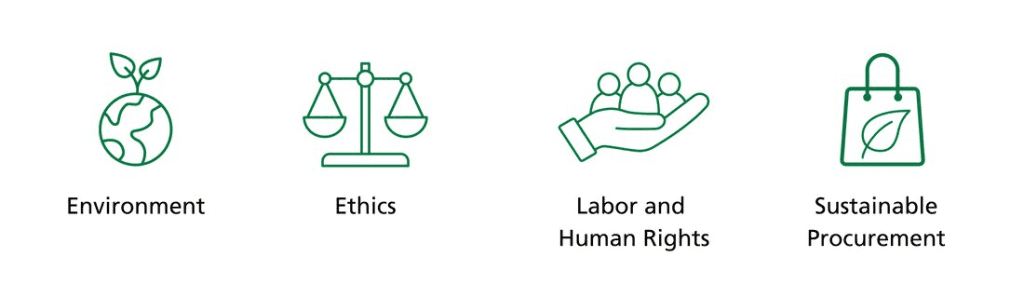
Figure 3 - Key Themes in EcoVadis ESG Assessments
These examples illustrate the progressive shift in approaches within the sustainability movement, as stakeholders increasingly recognise the importance of pursuing long-term strategies through collective engagement with all parties involved, rather than treating the initiative as a solitary endeavour. It also reflects the everchanging dimensions of environmental and social issues, alongside the increasing recognition by both individuals and businesses of the importance of prioritising sustainability in professional operations as well as in everyday life. To that end, a rising demand for professionals equipped with sustainability skills becomes inevitable, a trend that consequently highlights how understanding which sustainability skills are most essential can significantly advance one’s career.
In line with this, ASCM, the Association for Supply Chain Management, acknowledges the critical role of sustainability modules within their globally recognized APICS certification programmes, most notably embedded in the CSCP programme, and their instrumental contribution in driving career advancement. By gaining a strong foundation through APICS certifications—including CSCP, CPIM, and CLTD - you can build the confidence to anticipate and overcome disruptions, manage risks effectively, and evaluate and implement modern supply chain strategies, positioning yourself at the forefront of the profession.
For further professional guidance, feel free to contact us via email at info@advanceschool.ch, by phone at +41 61 2254332 or +41 79 5974100
Courses linked
-
Master APICS CSCP - Certified Supply Chain Professional - Interactive Live Webinar
The Executive Master CSCP Interactive live webinar is designed to prepare the candidate for the Certified Supply Chain Professional certification (CSCP) of APICS, in the Supply Chain Management area. » -
Master APICS CTSC - Certified in Transformation for Supply Chain
This programme is designed to prepare candidates for APICS CTSC international certification (Certified in Transformation for Supply Chain) » -
Master APICS CPIM - Certified in Planning & Inventory Management - Interactive Live Webinar
The APICS Executive Master Interactive live webinar is designed to prepare the candidate for the international Certification in Planning & Inventory Management (CPIM) of ASCM, the Association for Supply Chain Management. » -
Master APICS CSCP - Certified Supply Chain Professional
Executive Master designed to prepare the candidate for the Certified Supply Chain Professional certification (CSCP) of APICS, in the Supply Chain Management area. » -
Master APICS CPIM - Certified in Planning & Inventory Management
The APICS Executive Master is designed to prepare the candidate for the international Certification in Planning & Inventory Management (CPIM) of ASCM, the Association for Supply Chain Management. »